JIRA is where most software teams already live for sprint planning and issue tracking, which makes it a natural home for QA work too. But there's a big gap between "we log bugs in JIRA" and actually using it as a structured test management tool. Most teams we work with are somewhere in between, and closing that gap is often surprisingly low effort for the value it returns.
Beyond "create a bug ticket"
A defect ticket that just says "checkout is broken" wastes everyone's time, the reporter's, the developer's, and eventually the tester's when they have to re-verify a fix against a vague description. A well-structured JIRA workflow fixes that at the source.
- Consistent bug templates. Steps to reproduce, expected vs. actual behavior, environment, and evidence, every time, not whenever someone remembers.
- Clear severity and priority fields, used consistently, so triage decisions are based on actual impact, not who shouted loudest in standup.
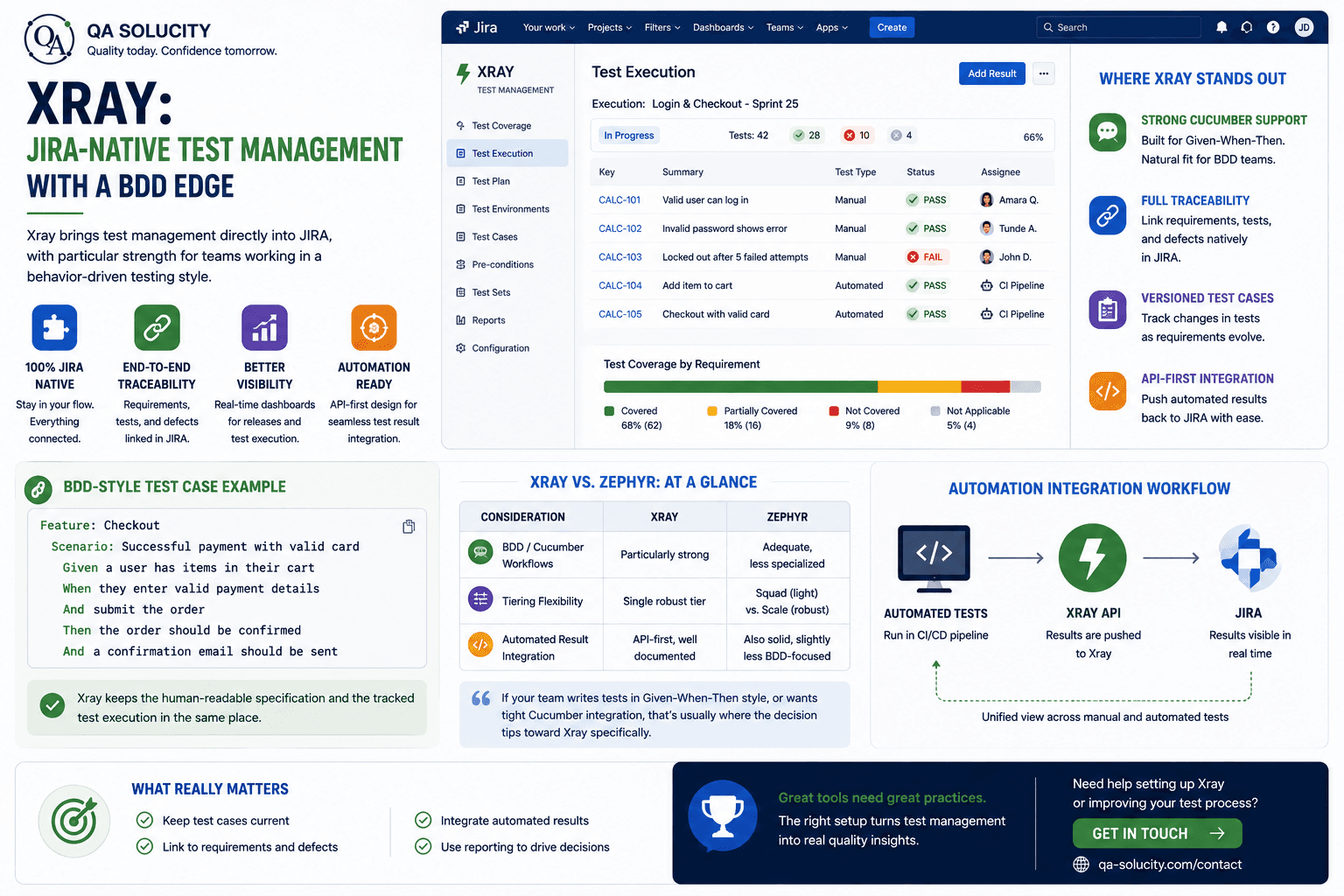
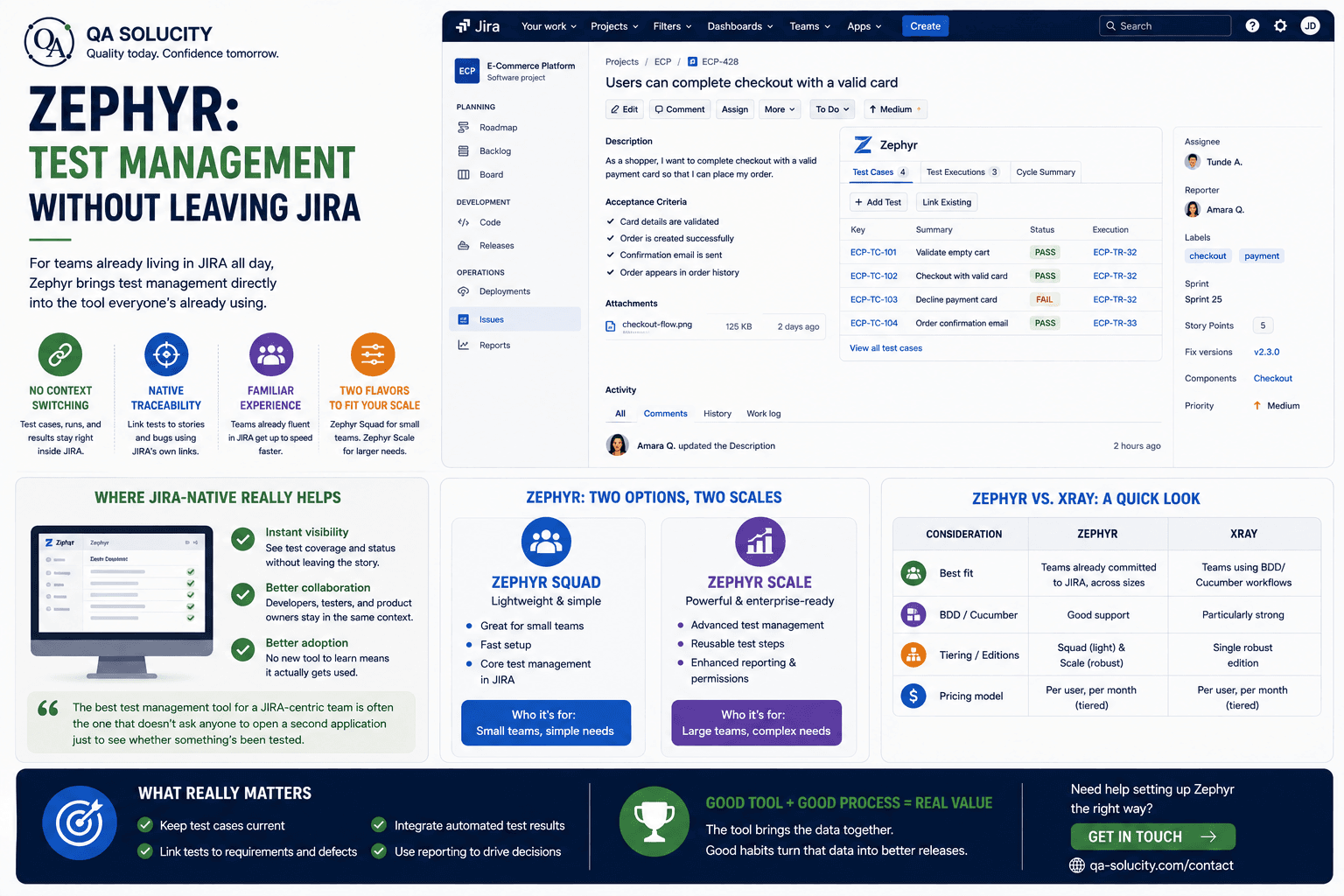
- Linked test cases, whether through a plugin like Zephyr or Xray, or a disciplined labeling convention, so a bug ticket connects back to the specific test that caught it.
- A defined workflow, Open → In Progress → Ready for Retest → Verified → Closed, so a bug's state is never ambiguous.
A template that actually helps
A defect ticket that follows a simple structure saves enormous back-and-forth:
- Summary: one clear sentence describing the problem.
- Steps to reproduce: numbered, specific, no ambiguity.
- Expected result: what should have happened.
- Actual result: what happened instead.
- Evidence: screenshot, video, or log, whatever proves it.
- Environment: browser, device, build version.
A bug report that requires a follow-up question to understand isn't done yet. The goal is a report a developer can act on without needing to ask "wait, what do you mean?"
Using JIRA for more than bug tracking
Combined with a test management plugin, or even structured labels and custom fields, JIRA can track test case coverage, execution status across a release, and traceability back to requirements, giving stakeholders real visibility into release readiness instead of a vague "QA says it's mostly done."
The dashboards this enables matter more than they sound: a release manager should be able to open JIRA and see exactly how many critical test cases have passed, failed, or are still pending, without asking QA for a status update.
Where teams go wrong
The most common failure mode isn't a tooling problem, it's inconsistency. Half the team follows the bug template, half doesn't. Severity gets assigned based on mood rather than criteria. Tickets get closed without verification. None of these are JIRA's fault, they're process gaps that good test management discipline closes.
If your team's JIRA setup has more chaos than structure, that's exactly the kind of thing QA Solucity's QA process setup and test management services help fix. Get in touch and we'll help you build a workflow your whole team actually follows.