Apache JMeter has been the open-source default for load testing since long before "performance engineering" was a job title. It's free, actively maintained, and genuinely capable enough that plenty of enterprise teams never feel a need to look elsewhere.
What JMeter handles well
- Protocol flexibility. HTTP/HTTPS is the most common use case, but JMeter also supports FTP, JDBC, SOAP, and several other protocols, useful for testing beyond just REST APIs.
- A GUI for building test plans, useful for constructing and visualizing load scenarios without writing code, especially valuable for teams building out their first performance testing process.
- Distributed load generation. JMeter can coordinate multiple machines to generate load beyond what a single machine could produce, important for genuinely high-scale tests.
- A large plugin ecosystem. Years of community plugins extend JMeter into nearly any performance testing scenario you're likely to encounter.
- Detailed reporting. Response time distributions, throughput graphs, and error rate breakdowns come built in.
A simple test plan concept
A typical JMeter test plan defines a Thread Group (simulating a number of concurrent virtual users), one or more Samplers (the actual requests being tested), and Listeners (collecting and reporting results):
Thread Group (500 users, ramp-up 60s)
 └─ HTTP Request Sampler: POST /api/checkout
 └─ HTTP Request Sampler: GET /api/order-status
 └─ Response Assertion: status code = 200
 └─ Summary Report Listener
This structure, simulate realistic concurrent load, assert on the response, and report results, is the core pattern behind most JMeter test plans, regardless of how complex the scenario gets.
Where JMeter shows its age
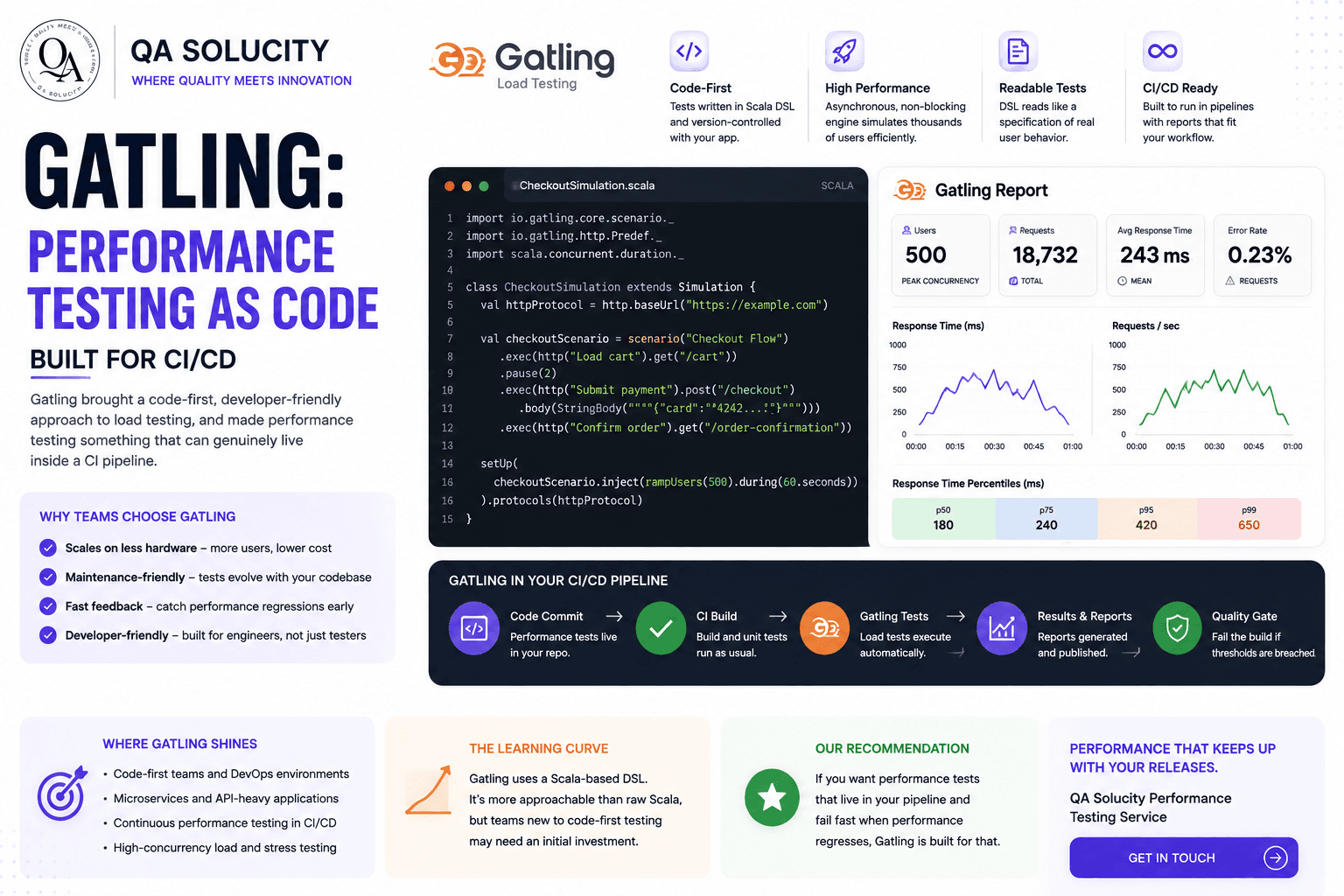
JMeter's GUI-first approach, while accessible, becomes harder to manage at scale, complex test plans built purely through the UI can be difficult to version-control and review compared to code-first alternatives like Gatling or k6. Resource usage can also become a bottleneck when generating very high load from a single machine, distributed setups help, but add operational complexity.
JMeter's biggest strength, its GUI accessibility, is also where teams eventually hit friction as their performance testing practice matures and needs to live in version control alongside the rest of the codebase.
When we reach for JMeter
JMeter remains a strong choice for teams that want a mature, well-documented, free tool with broad protocol support, particularly in enterprise environments already standardized around it. For teams wanting a more code-first, CI-native performance testing workflow, we often pair it with or replace it with tools like k6 or Gatling.
If you're building out a performance testing practice and want the right tool for your team's workflow, not just the most popular one, QA Solucity's performance testing service can help you decide. Reach out.