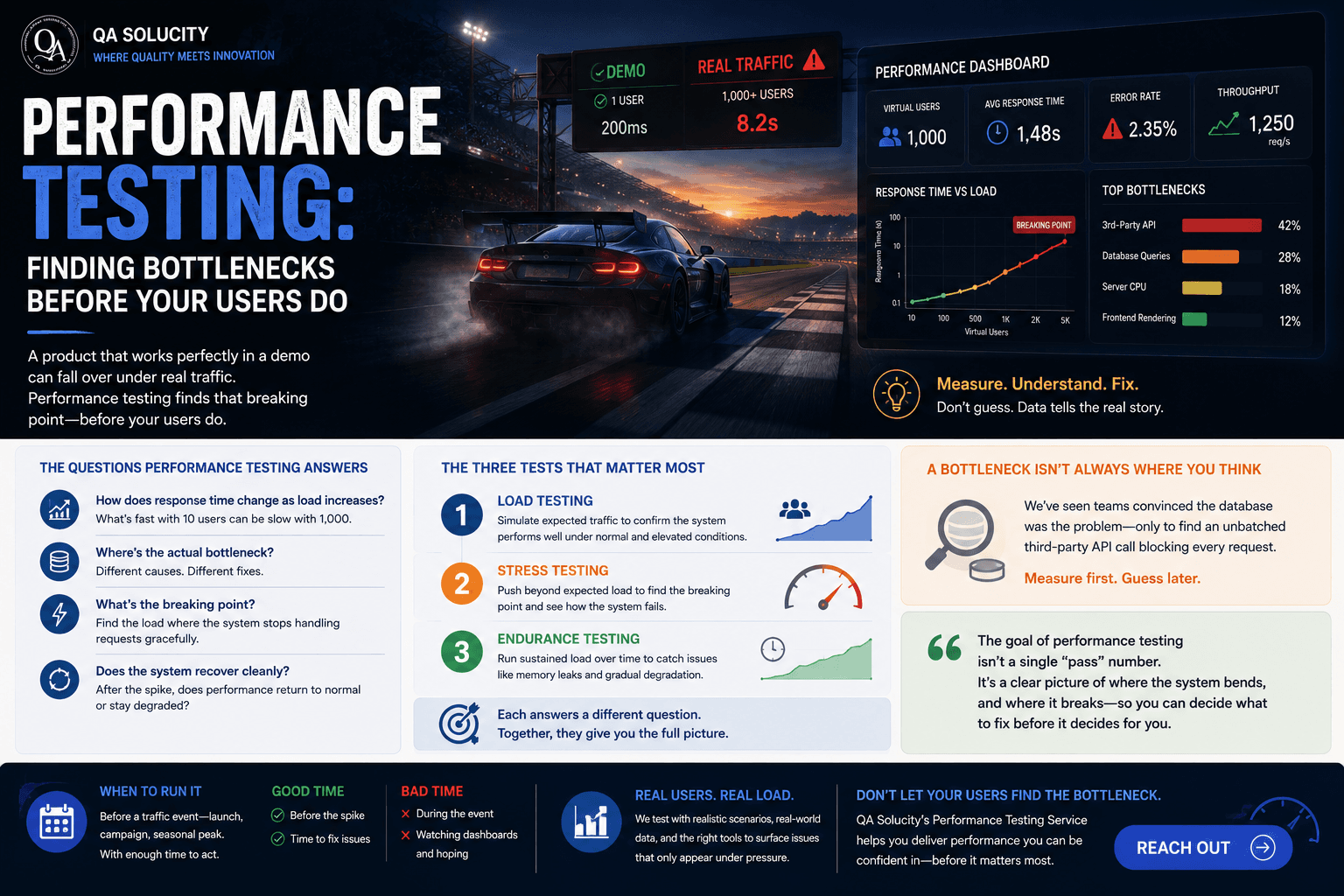
LoadRunner, now under OpenText after a series of acquisitions, has been the enterprise standard for performance testing since long before "performance engineering" existed as its own discipline. It's a commercial, feature-dense platform built for exactly the scale and complexity that large enterprise organizations actually operate at.
Where LoadRunner's depth shows
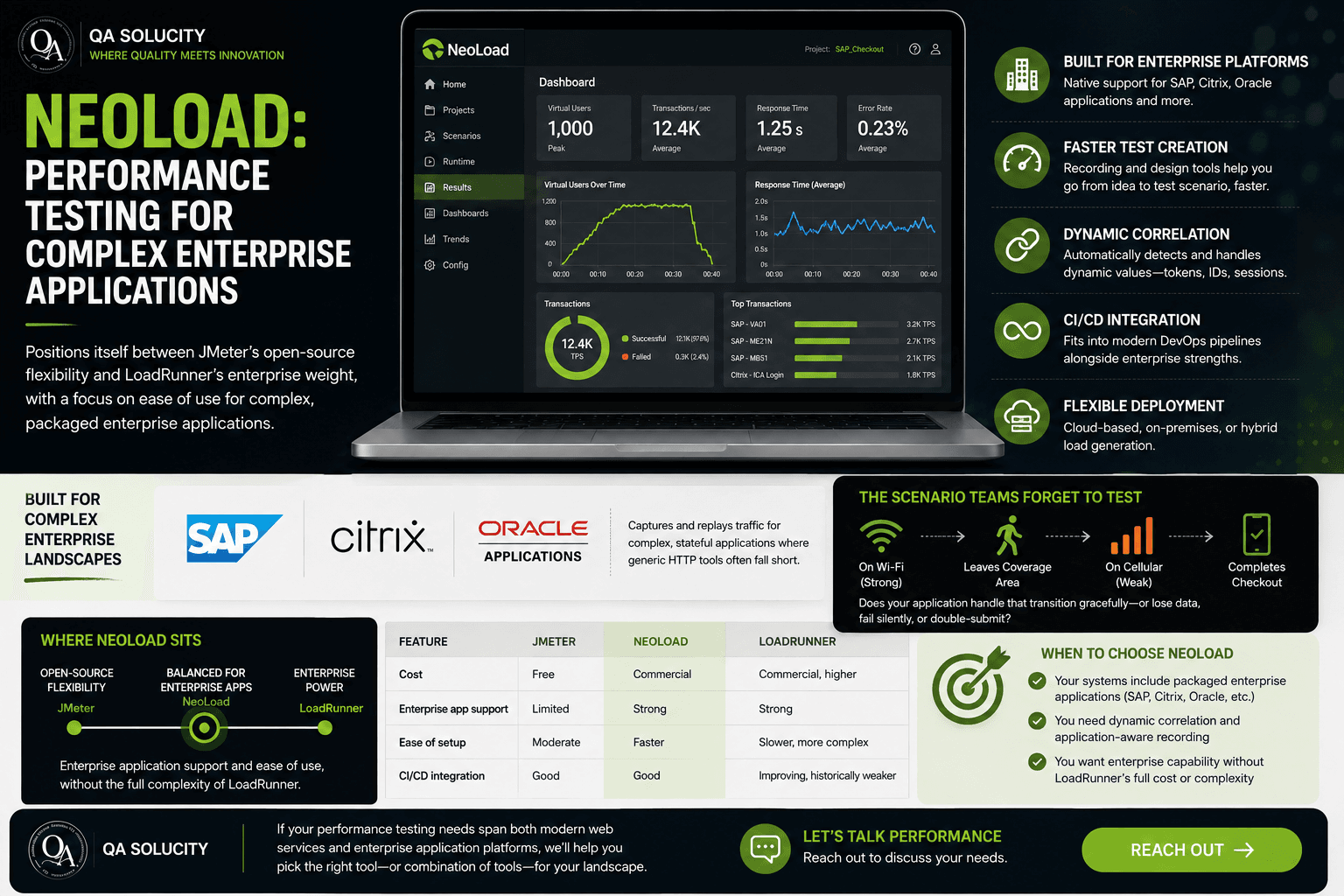
- Protocol breadth. LoadRunner supports an unusually wide range of protocols, web, enterprise messaging, legacy systems, ERP platforms like SAP and Oracle, that many modern performance tools simply don't cover.
- Enterprise-scale load generation. Built to coordinate massive, geographically distributed load generation for organizations testing at genuine enterprise traffic levels.
- Deep analytics and diagnostics. Detailed breakdowns connecting performance results back to specific infrastructure and application layers, valuable for large, complex system landscapes.
- Mature enterprise support. A long-established vendor relationship and support structure that risk-averse, large organizations often specifically require.
Where the friction is
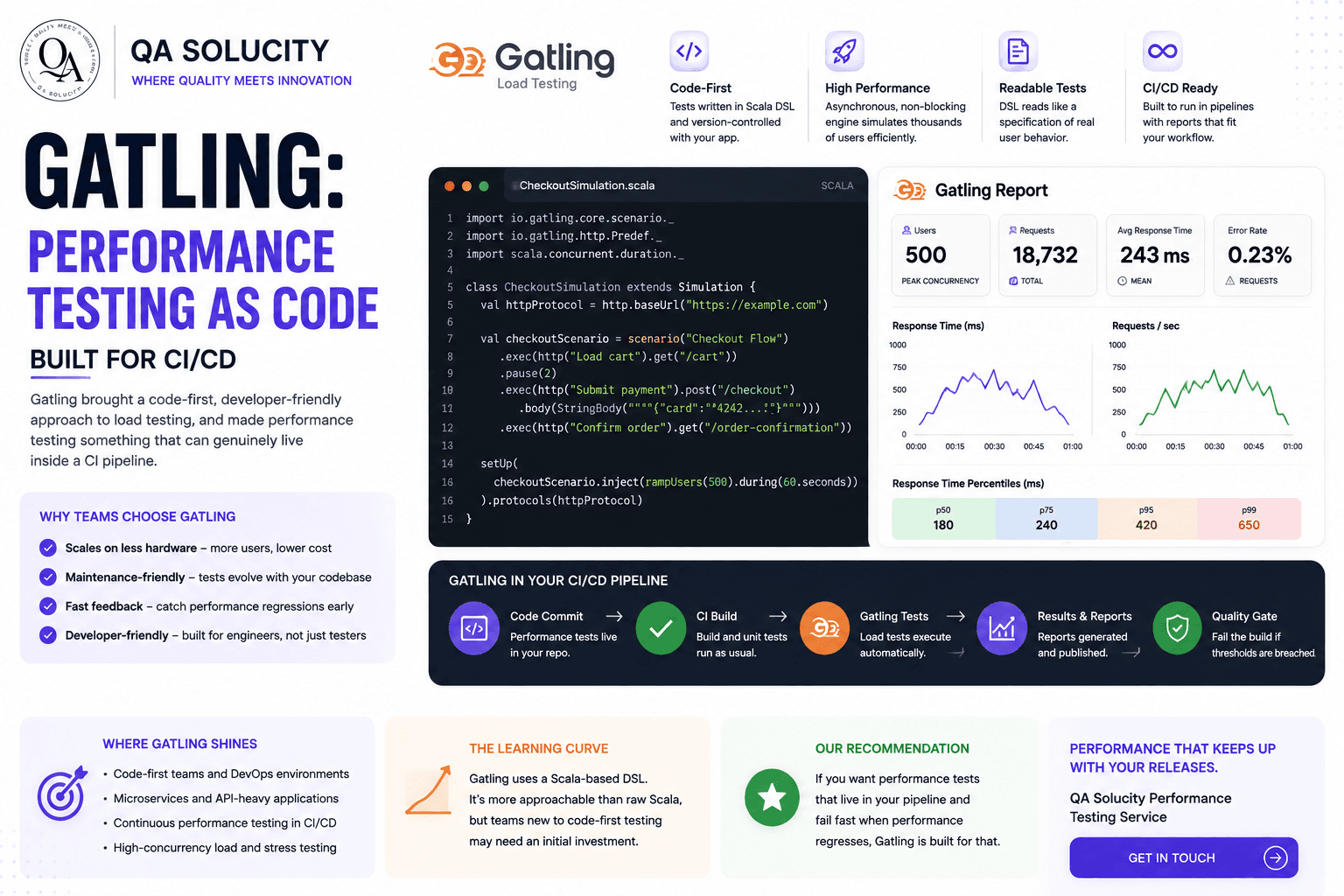
LoadRunner's comprehensiveness comes at real cost, in licensing, in setup complexity, and in the learning curve required to use it well. It's noticeably heavier than code-first, developer-friendly alternatives like Gatling or k6, which have gained ground specifically by being simpler to adopt, version-control, and integrate into modern CI/CD pipelines.
LoadRunner wasn't built for a startup's CI pipeline. It was built for enterprise organizations testing systems with dozens of interconnected legacy protocols, and in that context, its complexity is earned, not excessive.
Where it still makes sense
We'd point an organization toward LoadRunner specifically when the systems under test span legacy enterprise protocols that modern lightweight tools don't support, when existing infrastructure and licensing already center on it, or when the organization's scale and complexity genuinely matches what LoadRunner was built to handle.
For most modern web and API-centric products, particularly those wanting performance tests that live in version control alongside application code, lighter tools like k6 or Gatling typically offer a better fit, faster to adopt, easier to integrate into CI, without sacrificing the load generation capability most products actually need.
Choosing based on your actual systems
The right performance testing tool depends heavily on what you're actually testing, a modern REST API has very different needs than an environment spanning SAP, mainframe integrations, and enterprise messaging queues. If your systems include the kind of enterprise protocol complexity LoadRunner was built for, that's a real, legitimate reason to reach for it.
If you're navigating a mixed or legacy-heavy performance testing landscape and want the right tool for what you're actually running, QA Solucity's performance testing service can help you make that call. Reach out.