Every few years, someone declares manual testing dead. It never is. Automation has absorbed a huge share of repetitive regression work, and rightly so, but the parts of quality assurance that require judgment, context, and a genuine sense of "something's off here" still belong to a human tester.
At QA Solucity, manual testing isn't a leftover from before we had better tools. It's a deliberate part of how we validate software, chosen because it's the right tool for specific jobs.
What manual testing is actually good at
Scripted automation checks whether the system does what you told it to do. Manual testing checks whether the system does what it should do, including the things nobody thought to write a test case for.
- First impressions and usability. A layout that technically works but confuses real users won't fail an automated assertion. It fails a human trying to use it.
- Exploratory discovery. Testers who understand the product can wander off the happy path and find the bugs that only show up when someone does something unexpected.
- Visual and interaction polish. Alignment issues, awkward transitions, and inconsistent spacing are trivial for a person to spot and surprisingly hard to automate reliably.
- New and rapidly changing features. Writing automation for a feature that's still being redesigned weekly is often wasted effort. Manual testing keeps pace with change.
Where we focus our manual testing effort
We don't manually test everything, that would be slow and wasteful. We focus manual effort where it earns the most confidence per hour spent:
- Critical user journeys. Signup, checkout, core actions, the paths where a bug directly costs you users or revenue.
- New releases before they ship. A final human pass catches the class of issue automation quietly misses, things that are technically correct but practically wrong.
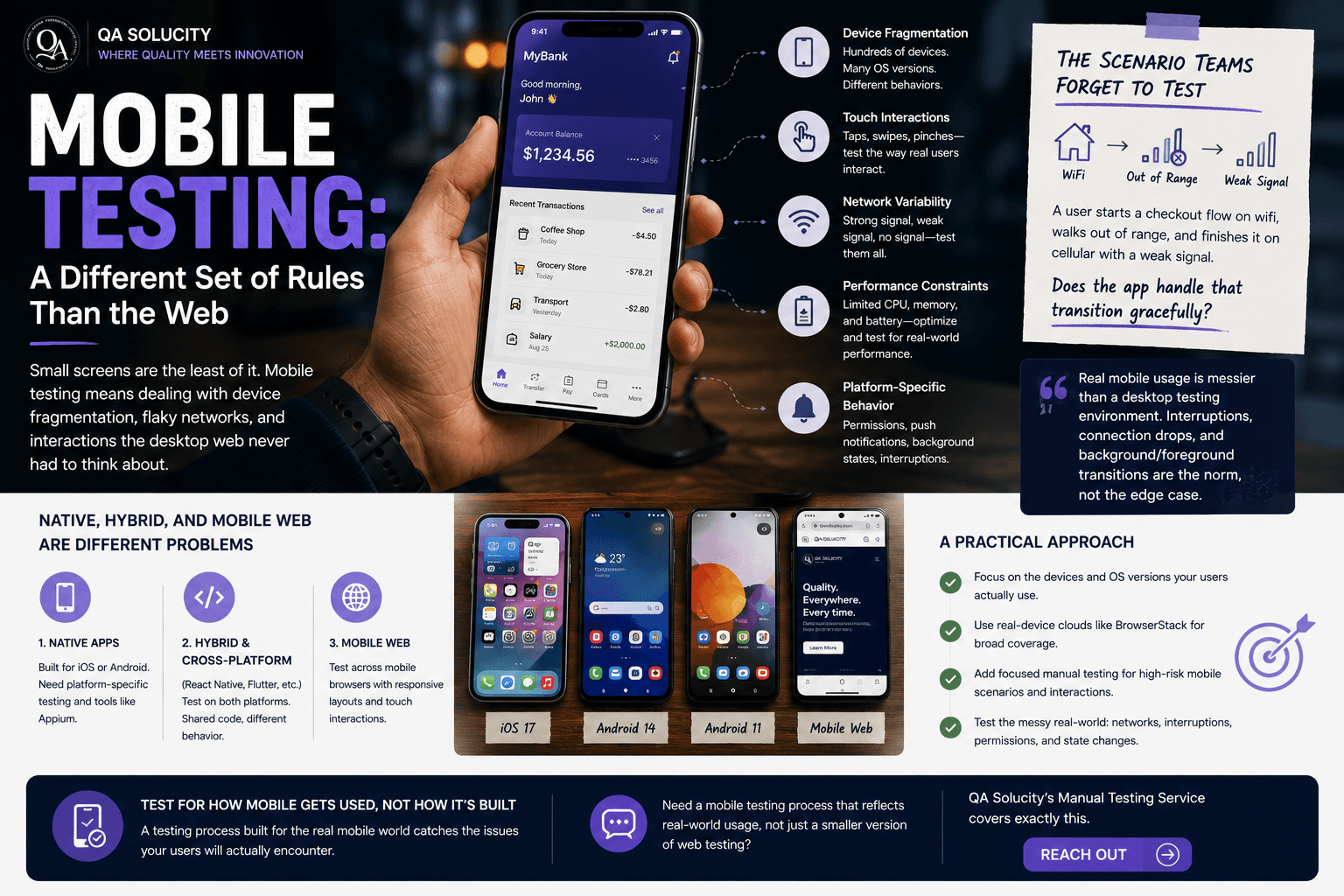
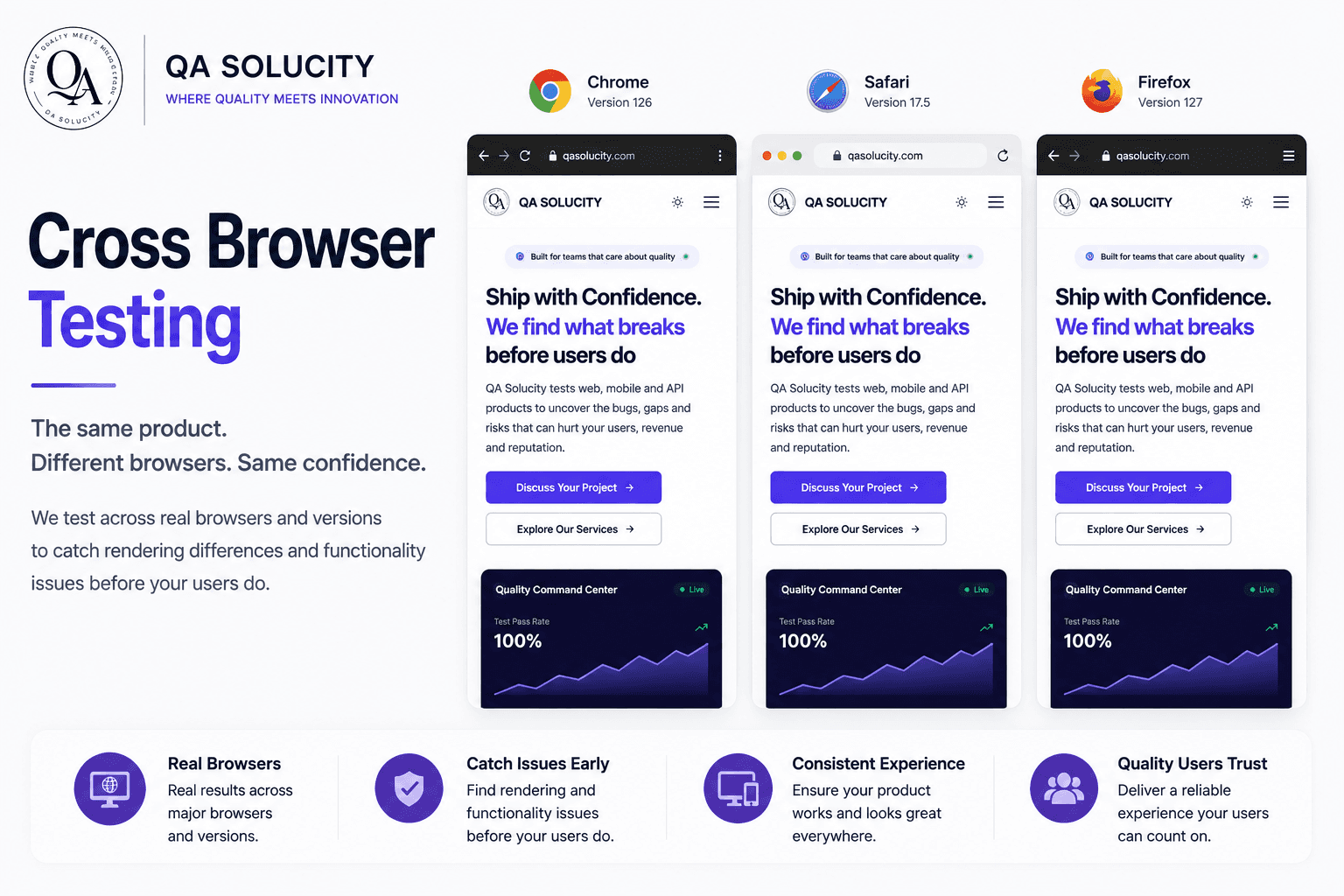
- Cross-browser and cross-device spot checks. Automated coverage handles the matrix; manual testing confirms the experience actually feels right on the devices that matter most to your users.
- Accessibility and usability reviews. These require empathy and judgment that scripted assertions can't replicate.
How we structure a manual testing engagement
A good manual testing pass isn't just "click around and see what happens." We combine scripted test cases for known-critical flows with structured exploratory sessions, then document everything with clear reproduction steps and evidence, not vague notes that leave your engineers guessing.
The best bug reports don't just say something is broken. They tell you exactly how to see it broken yourself, on the first try.
That discipline is what separates useful manual testing from busywork.
Manual testing and automation work together, not against each other
The real question isn't "manual or automated?" It's "what's the right mix for this product, at this stage?" Early-stage products with rapidly shifting requirements lean manual. Mature products with stable, high-traffic flows lean automated. Most teams need both, applied deliberately rather than by default.
If you're trying to figure out where manual testing fits in your own QA process, that's exactly the conversation QA Solucity's manual testing service exists for. Get in touch and we'll help you find the right balance.